
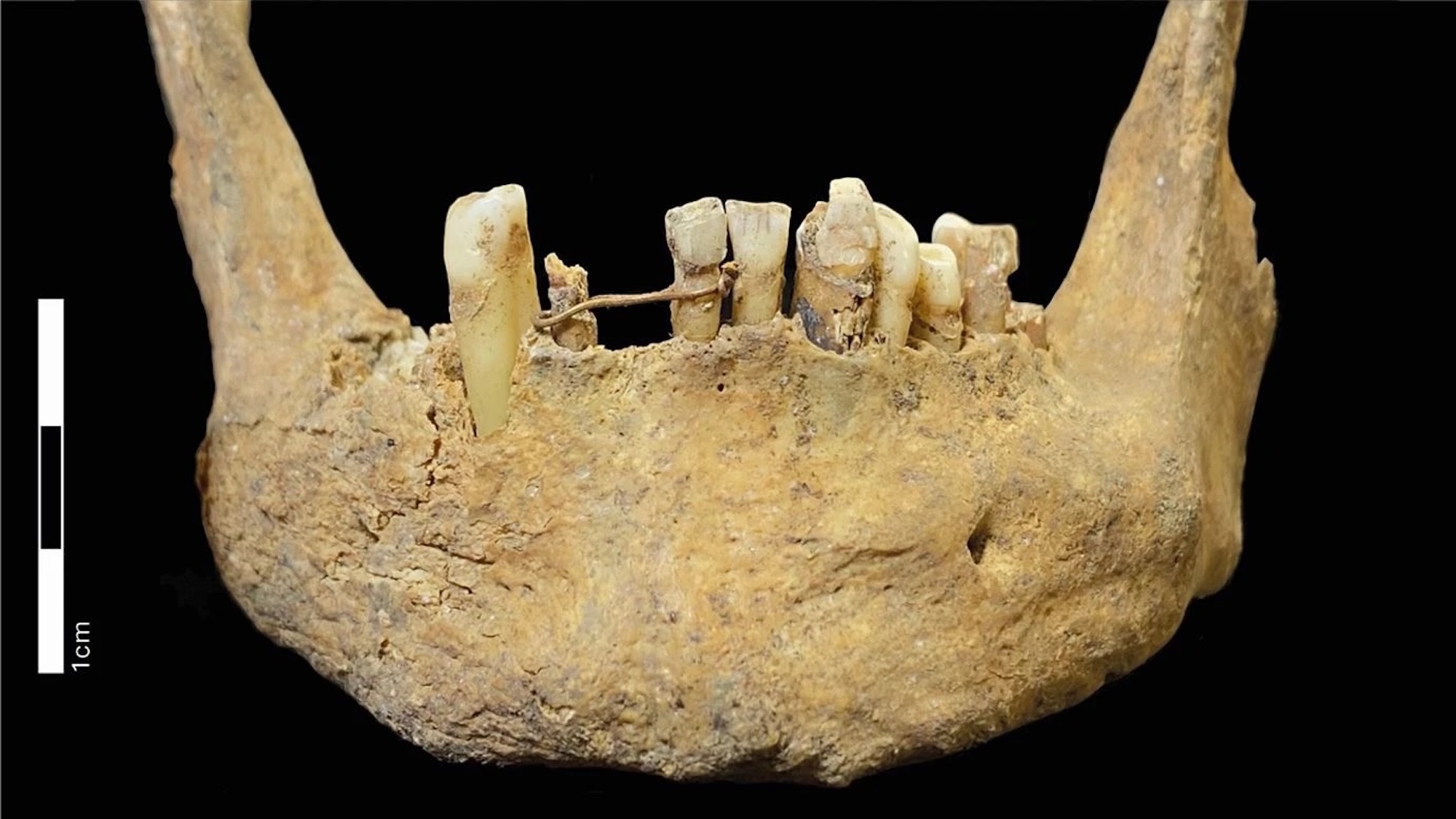
Today, extensive tooth repair or replacement often requires the installation of a dental bridge made from durable resin and metal. That said, the procedure is nothing new. Archaeological examples of dental bridges date back thousands of years across cultures around the world. Recently, researchers discovered the oldest variant ever found in Scotland, but it’s anything but inconspicuous. According to a study recently published in the British Dental Journal, the medieval dental bridge excavated in Aberdeen was crafted using 20-carat gold.
Simplified bridges made from silver or gold wire called dental ligatures date back to at least 2,500 BCE in ancient Egypt. In some cases, funerary preparers installed them in the recently deceased to make their bodies appear more “complete” for the afterlife. However, it took until the Middle Ages before more complicated dentistry spread throughout Europe. Even then, primary texts suggest tooth maintenance likely wasn’t performed by doctors or surgeons.
“During the Middle Ages, teeth were often treated by barbers, or dentatores, who were individuals that specialized in teeth.”University of Aberdeen archaeologists wrote in their study.
Few dental ligature artifacts exist from England prior to the 17th century, and none of them were found in Scotland before the team’s analysis. That is until 2006. A team digging on the grounds of East Kirk of St. Nicholas Kirk in Aberdeen (“kirk” is Scottish for “church”) uncovered a trove of skeletal remains including the skull in this study.. The team recently reexamined 100 of the roughly 900 individuals in the collection—only one of which featured a dental ligature.
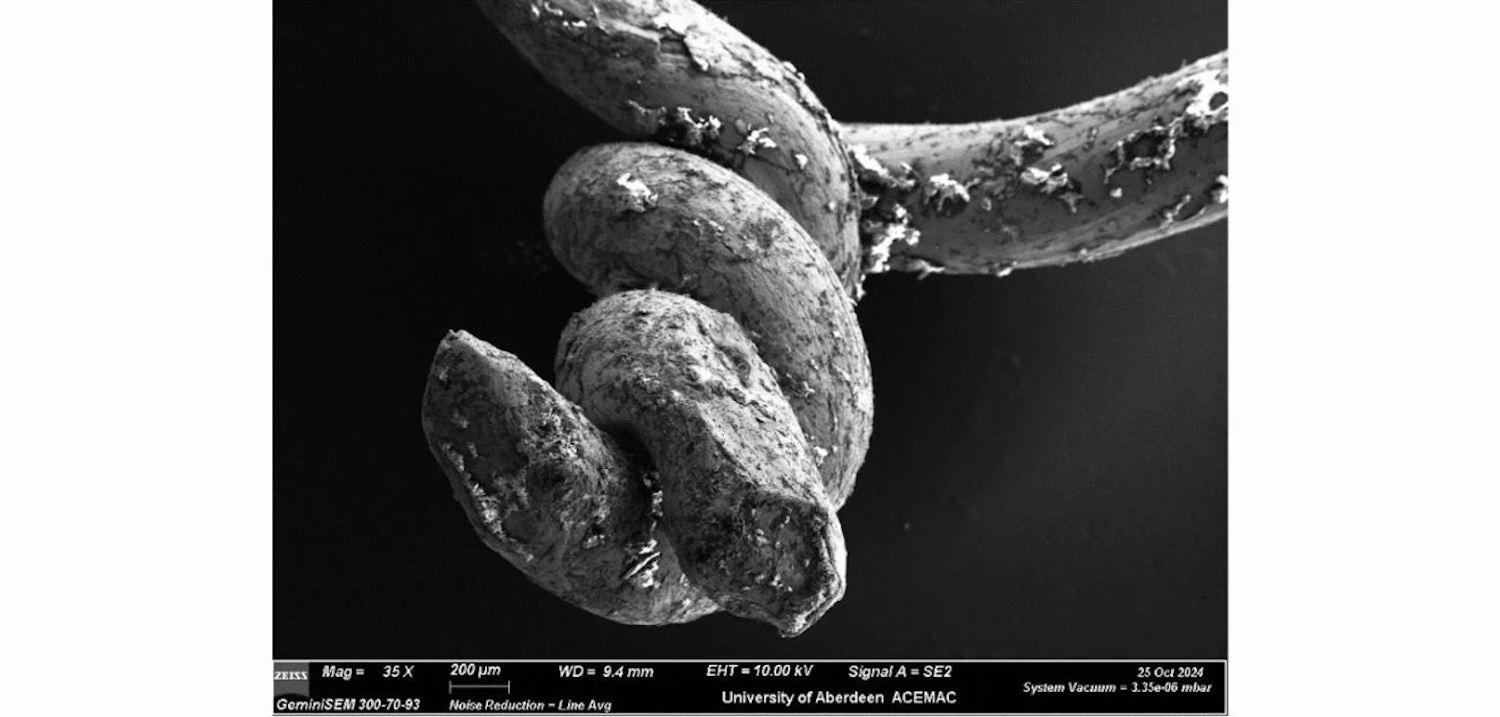
X-ray spectroscopy, scanning electron microscopy, and radiocarbon dating filled in many gaps about the person’s identity. Based on their findings, the researchers believe the remains belonged to a middle-aged man who died in Aberdeen sometime between 1460 and 1670. Dental evidence also revealed his bridge had been installed long before his death.
The 20-carat gold alloy ligature’s existence and composition suggests that the man was not only wealthy, but well connected in his community. Although they can’t definitively know if he received care in Aberdeen, records show around 22 goldsmiths worked in the area during that era. These artisans were likely skilled enough to craft and securely knot the wiring.
The reasons for receiving the implant were probably “multifaceted,” according to the study’s authors. Physical appearance during the Late Medieval and Early Modern eras was often culturally tied to one’s character.
“The appearance of a person and their perceived health was linked to one’s sins,” they explained. “As such, the social importance of an individual’s smile encouraged those who were able to afford such treatments to seek them out.”
Apart from being the first dental discovery of its kind in Scotland, the artifact underscores just how long humans have balanced the complex interplay between wealth, beauty standards, and personal health.
