We may earn revenue from the products available on this page and participate in affiliate programs. Learn more ›
In 1994, I got my first summer job at a video store so I could save up enough to stock up on audio gear. I knew, just knew, that if I could get two turntables and a mixer, I could be the next Sasha & Digweed, DJ Icey, or Joey Beltram. And it couldn’t be just any turntables if I was going to headline NASA @ Shelter, The Club at Firestone, Ministry of Sound and/or Renaissance by the time I was 18. It had to be a pair of Technics SL-1200MK2 turntables, the tank-like high-torque club icon. Teenage me was so … let’s say driven, and I mean delusional.
It’s 2026, and I’m thinking about this sitting in front of 55th-anniversary Technics SL-1200MK7 turntables (limited to 12,000 units). The turntables sit in an event space in Tokyo, in the offices of Technics’ parent company, Panasonic. Three decades later, a pair of Technics finally took me around the world. Just not this pair. Not the Technics I expected.
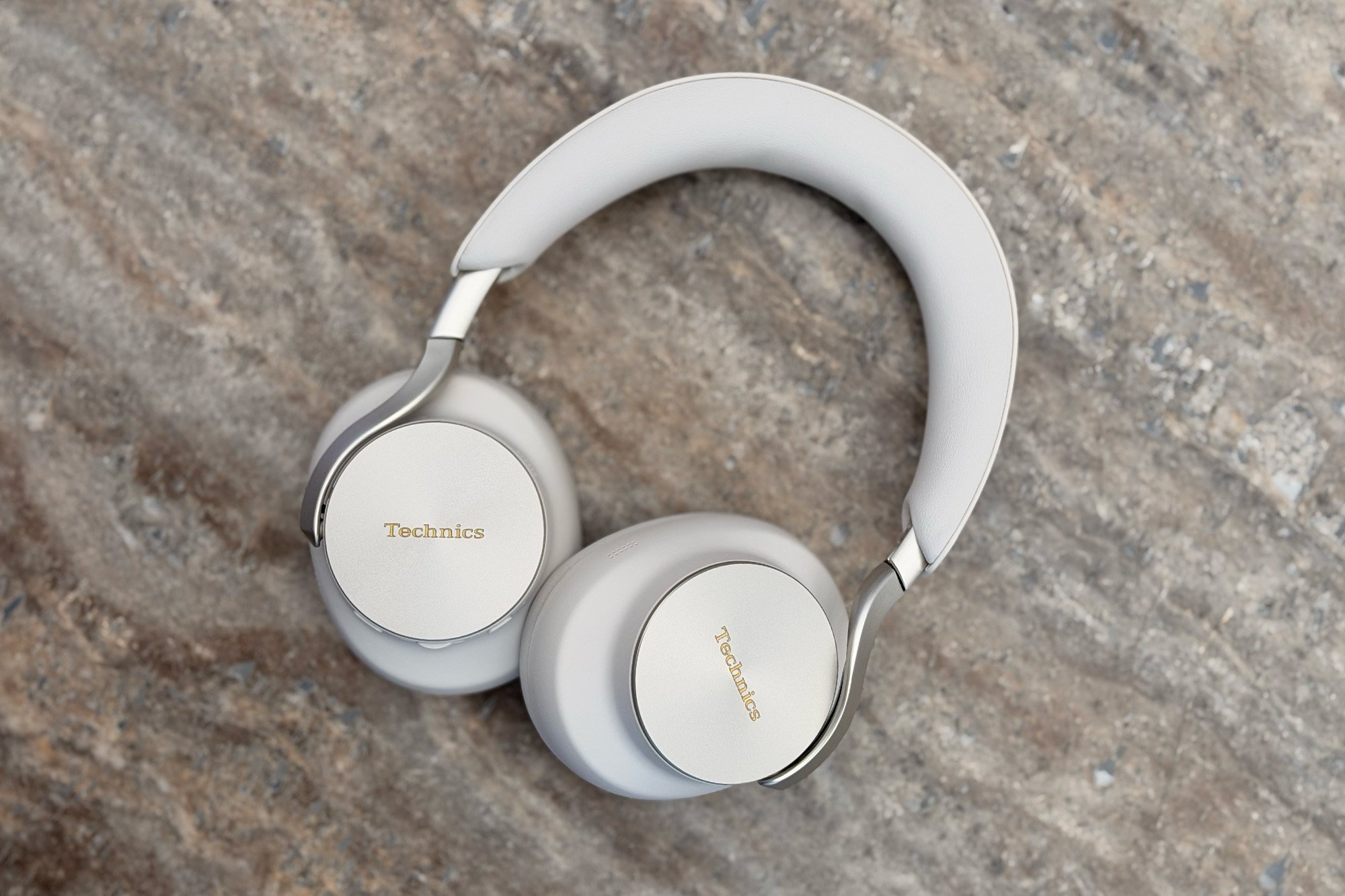
I first wanted two Technics because I was obsessed with a fluid mix. But the pair I’m holding now is all about a fluid mixture. I’m in Japan to learn about the new Technics EAH-A1000 flagship wireless active noise-canceling headphones, packed with proprietary acoustic technologies built around a newly developed 40mm Magnetic Fluid Driver that continues the Osaka-based brand’s legacy of stability, solidity, timing, and tactility.
[Disclosure: Technics provided travel accommodations during the creation of this story.]

A sequel to 2022’s EAH-A800, the EAH-A1000 also follows 2025’s award-winning EAH-AZ100 true wireless earbuds, taking the 10mm wobble-taming Magnetic Fluid Driver that made those earbuds so well-received and rebuilding it for an even more authoritative over-ear headphone—a process that Technics’ engineers admit turned out to be much harder than just making it bigger.
Much like the AZ100 built on tech first introduced in the Technics EAH-TZ700, a set of $1,199 wired earphones, the A1000 had to draw on a new diaphragm material and a symmetrical edge design borrowed from the flagship SB-R1 speaker to take those distortion-reducing tricks this far. Technics almost didn’t make it this far.
In a display case-lined hallway, we walk along Panasonic product history. The company’s first hit, a two-way socket, was designed to let homes without wall outlets run a light and an appliance at once. It’s a humble object representing a powerful concept: refusing to accept that you have to choose. Technics launched in 1965 as an audio brand using precision-engineered technology (hence the name) to compete on a global stage. From its first two-way speaker to direct-drive turntables to high-power, low-distortion amplifiers, the underlying theme has been breaking with convention in the pursuit of both precision and feeling. It’s all a continuation of founder Konosuke Matsushita’s belief that material and spiritual well-being go hand in hand: societal progress shouldn’t require picking one.
But Technics was suspended in 2010 as markets shifted from hi-fi listening stations to digital. The engineers didn’t stop tinkering, however. As phones and streaming pushed listening out of the living room, even as the vinyl revival took hold, Technics was preparing for the high-resolution renaissance. The brand relaunched in 2014 at IFA in Berlin, first with Reference and Premium class amps and speakers, followed by its SL-1200 turntables in 2016 and its earbud line in 2020.
One afternoon, we watch 2025 DMC Classic World Champion DJ Fummy [below, left] cut, scratch, and juggle on stage at the subterranean Robin Club, showcasing the brand’s enduring DJ heritage. Technics has sponsored the DMC championships for decades, and last year the World Final came to Tokyo for the first time for the competition’s 40th anniversary. Turntablists kept the 1200 alive even when the brand was dormant.
One night, we’re treated to a performance by Michiko Ogawa [below, right], a professional jazz pianist who led the revival of the Technics brand and whose ears continue to sign off on the sound signature of every Technics product. A short program of standards, just Ogawa-san’s voice and the ivories, reinforces Technics’ long-standing intention to present music as natural, neutral, artist-oriented. Two very different kinds of listening represent one brand capable of energy and purity.


Achieving this with the A1000 required solving problems the earbuds never hinted at. During an engineering presentation, product planner Daisuke Shigetomi admitted the team initially believed the magnetic fluid keeping the voice coil from tumbling in the AZ100 was so highly developed that it could be extended to a 40mm driver.
It quickly became clear, however, that the A1000’s larger diaphragm meant more flex, which introduced new issues with distortion and damping. Simply adding more fluid suppressed flex but also natural resonance and musical expression. This, in turn, led to clean but dull reproduction. The solution went beyond adjusting the amount of fluid to tweaking its properties through a balance of proprietary oil(s) mixed into the magnetic particles’ suspension.
Instead of letting distortion-fighting liquid carry the full load, the team looked to another technology to help: SST, or Symmetrical Surround Technology. A conventional surround moves differently going forward than going back, which means it pushes different volumes of air each way, which means it creates … you guessed it, distortion. As the name implies, the SST edge (originally developed for the five-figure SB-R1 speakers) moves symmetrically, which pushes the same volume of air in both directions.
SST steadies the diaphragm to keep timing and dynamics intact. Of course, a 40mm driver in an earcup behaves differently than a floor-standing speaker with plenty of room for displacement. So the A1000 uses tangential cuts to make the edge more flexible, further lowering disruptive resonance.
As for what the fluid and edge are steadying, it was the hardest fight of all. When developing a driver to improve on the PEEK/PU-based A800, the initial metal and resin composites trialed all proved too heavy, didn’t absorb vibration well enough, and narrowed the soundstage. Carbon fiber’s low weight, high stiffness, and vibration damping could provide a non-laminated solution if it could be shaped properly into a dome in the center of a cone. Prototypes, however, warped after molding. But deformed materials bring untwisted perspectives.
Similarly to the fluid, easy fixes to the material production caused the sound to lose power and get muddier, according to acoustic engineer Riku Takeda. So choices that improved manufacturability but compromised sound quality, such as a shallower cone, were not acceptable. The team had to find the right accumulation of small changes rather than one big one. This meant layering carbon fibers running in different directions and refining how layers were bonded in order to make target areas stiffer. At the same time, they had to adjust molding temperature and pressure to avoid introducing defects elsewhere.
Beyond finding the right circular strengthening rib for the raised-cone geometry, and pulling techniques (appropriately) from earbuds and tower speakers for its engine, the team had to rethink the acoustic path around the driver, too. A flat baffle gives sound a clearer path with fewer reflections; an acoustic control chamber controls airflow behind the driver to allow low and mid frequencies to fill out; and the high-density memory foam ear pads support a seal that ensures sound and noise cancellation behave as planned. The sum of these parts is low breakup without lifeless sound, from a driver that’s light but not flimsy. Once again, Technics refuses to choose.


Design DNA-wise, the A1000 is similarly a game of millimeters played out over two years of development, as design lead Honoka Kudo explained. The depth and density of the spun-metal finish changed how the faceplate and its gold, engraved flagship logo reflected, with many samples required to settle on the desired hue and saturation. Like a record’s grooves circling the spindle as the strobe dots ring the platter of an SL-1200, or the subtle rightward swing of a VU meter needle in the “Rediscover Music / Technics” slogan, it’s unmistakably the brand’s iconography.
The team finally landed on the contrast aimed for, with sharp edges and spun metal along the circular faceplate reading as precision and soft curves along the matte earcups reading as warmth. Similarly, choosing a Platinum Greige colorway (a lovely grey-beige alternative to silver) took multiple samples to hit the desired brightness without skewing too yellow or looking unsophisticated.
As for the cantilevered Flow Arm (which makes me think of an S-shaped tonearm), it required countless revisions to achieve the seamless transition from square at the slider/folding-swivel mechanism to triangular along the earcup. The goal was to be functionally honest and structurally efficient, remaining strategically balanced visually while accommodating internal cabling.
The headband as a whole sits at a 13-degree angle, an optimized orientation determined, alongside the earcup dimensions and swivel axis, by analyzing 500 head shapes. The breakdown was roughly 50/50 women and men, as the designers noted that headphones have become equal parts fashion accessory and productivity tool. This led to lighter clamping force but with more even contact around the pad. And, as a 13-hour flight back from Tokyo can attest (which the battery life of 40- to 45-hour ANC on/80- to 90-hour ANC off handled no problem), the A1000’s 306g weight feels plush and poised.
Of course, with the faceplate’s heritage-evoking, capacitive-restricting aesthetic, touch controls were out. But earbud owners sometimes complained about accidental touches registering, so using the available real estate for physical Power/Bluetooth, ANC-Ambient, and Slide-Switch track/volume controls was doubly deliberate.


All this would be meaningless if it didn’t serve a headphone that sounds great. Demoed with a selection of high-res tracks (some of the usual audiophile suspects, such as Daft Punk, Eagles, etc.), it’s immediately apparent that the goal of spacious, realistic reproduction was achieved. While its tuning was approved with ANC on using LDAC over Bluetooth 6.0, and that’s the way I’ve preferred to listen using the Questyle QCC Dongle Pro2, the A1000 still preserves vocal texture and natural decay connected to an iPhone over AAC.
But for the finest definition and punchiest presentation, lossless audio using USB-C removes compression and conversion artifacts, further scaling up the taut, articulate bass and expansive transient details across its 20Hz-40kHz frequency response. Adele is all well and good, but my test playlist (including Radiohead, Massive Attack, Arooj Aftab, Kelela, Skee Mask, the Knife, Blanck Mass, Run The Jewels, Asunojokei, and Leviathan, among others) hit hard and incisive, consistently expressive but never sounding congested.
This focus on detail greatly benefits Dolby Atmos spatial audio, too, where you get character without fatigue that makes you want to lean in. And if Direct Mode or other presets aren’t your preferred sound signature, the Technics Audio Center app includes an eight-band EQ alongside ANC adjustments and codec selection, etc., so you can dial in something more personal.
This emphasis on clarity continues through a demonstration of the eight-mic array. A Technics team member is locked in a soundproof booth flooded with background noise, and we take her call using the A1000 to experience how its AI beamforming (powered by Panasonic Digital Enhanced Cordless Telecommunications technology) recognizes human voices and suppresses everything else. Those same mics, placed for performance with design adjusting accordingly, help check the seal and monitor surrounding noise for adaptive ANC, which is significantly improved from the A800 for stronger cancellation of human voices in the 300Hz-3kHz midrange.
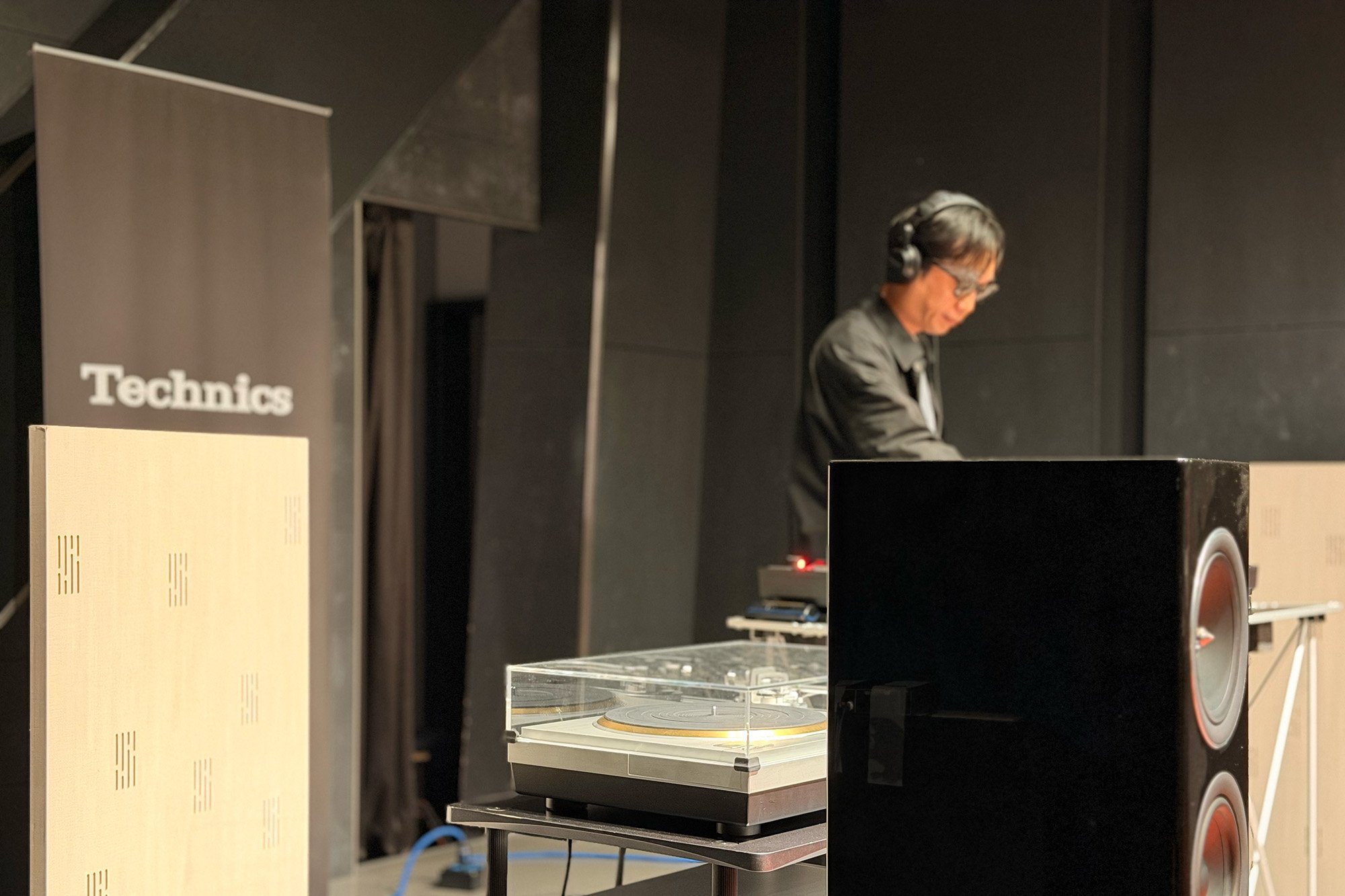
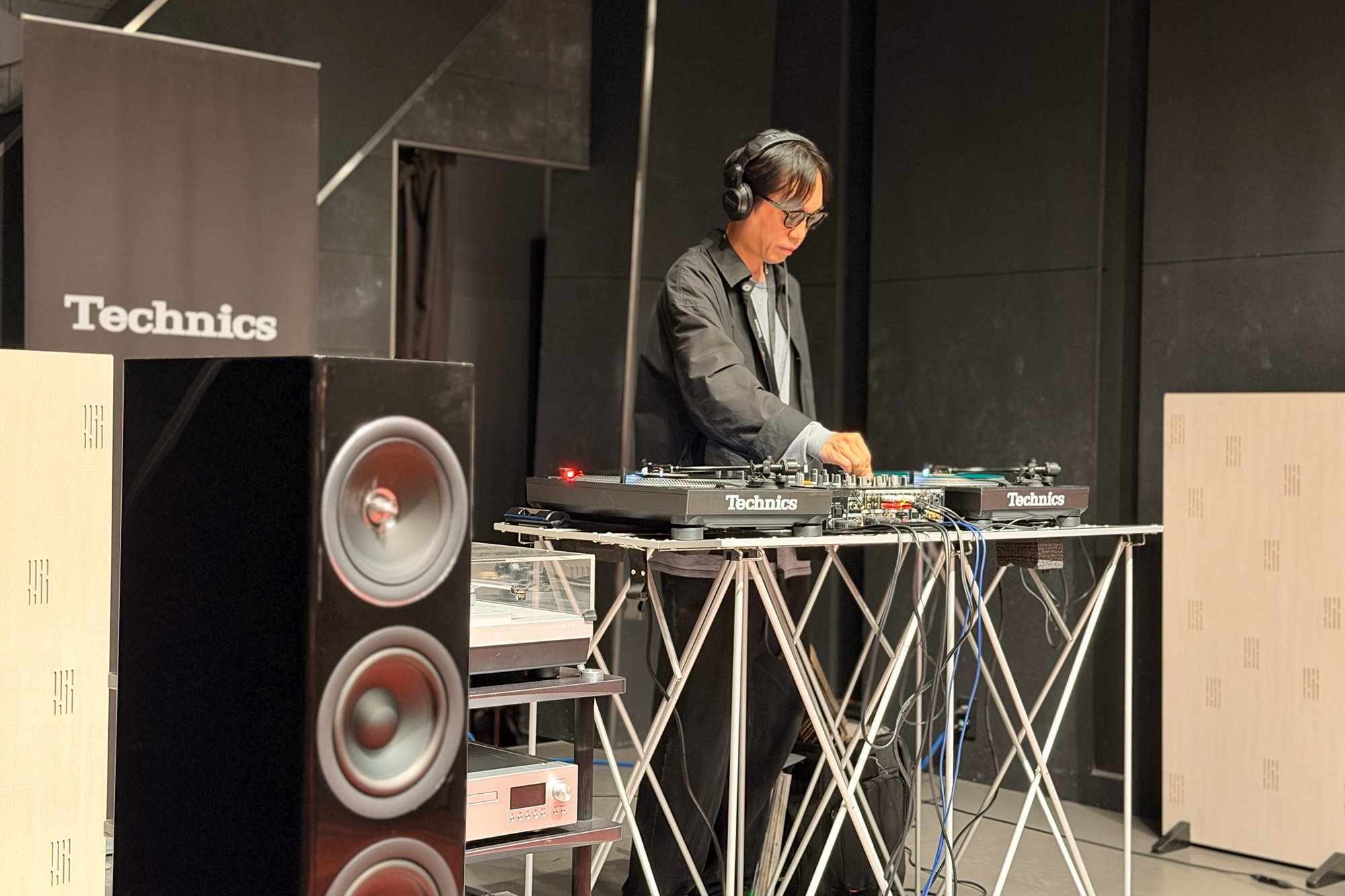
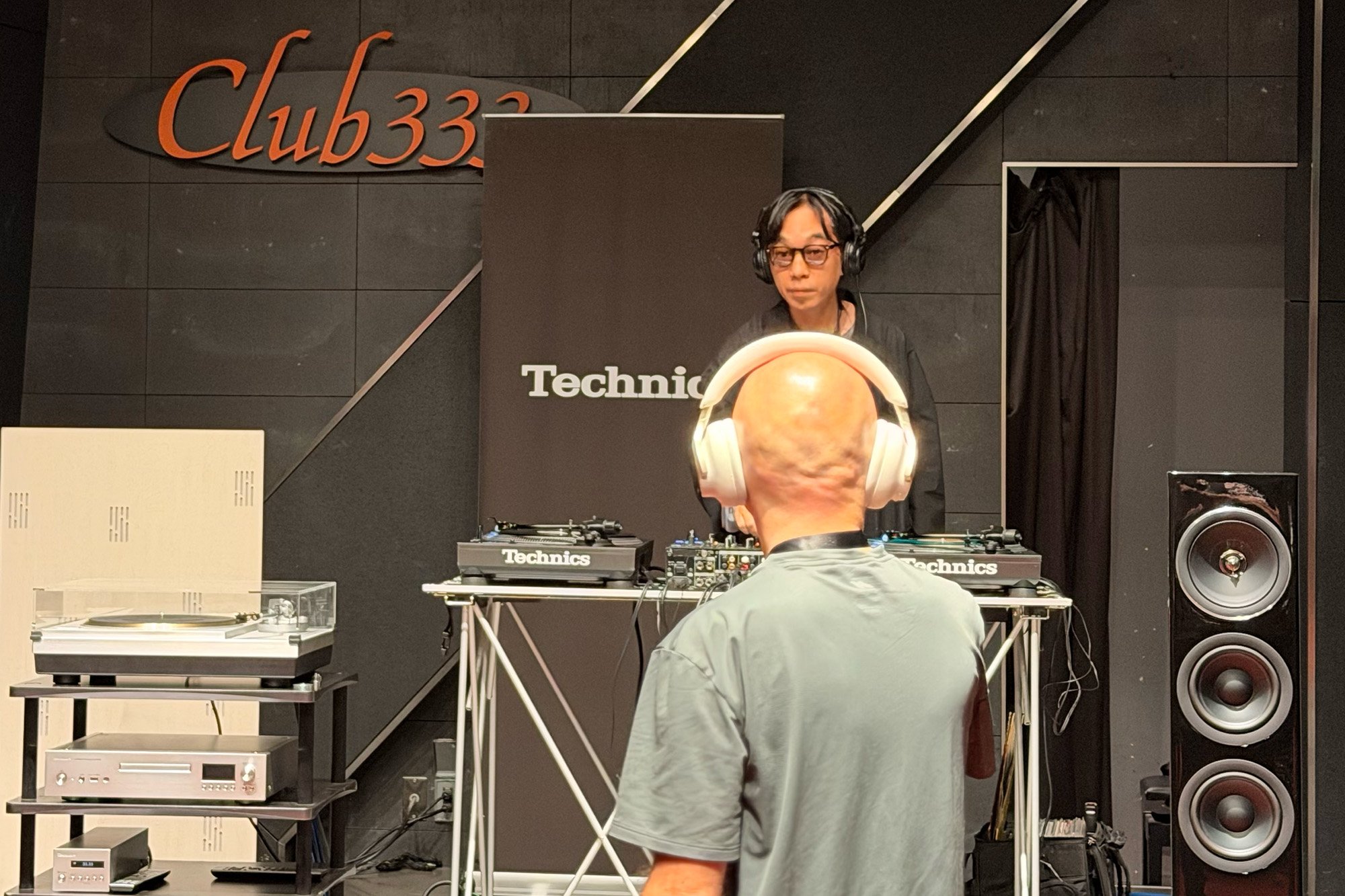
The most memorable demonstration, however, is held at Tokyo Tower as the sun sets. We gather alongside dozens of international journalists, creators, and staffers, in a closed-off section of the observation deck as DJ playing golden-hour R&B and silky downtempo over a Technics hi-fi system.
We’re then handed A1000s connected to an Auracast transmitter so we can listen simultaneously with headphones. (You could recreate this at home with the right gear, FYI.) We wander this “Silent Disco,” looking at displays of Technics limited-edition fashion collaborations and miniature gashapon collectibles, activating a highly transparent Ambient mode when we want to talk to one another. This mode has a noticeable midrange lift that helps intelligibility with the headphones on. Whether you crave immersion or conversation, the A1000 once again doesn’t make you pick.


The trip started with a promise of omotenashi, Japanese hospitality where every detail matters. We’re never without snacks and drinks. One night at dinner, I mention someone telling me about the Kinoko no Yama vs. Takenoko no Sato debate, sort of a Japanese version of Coke vs. Pepsi but with differently shaped chocolate-covered biscuits, and how I haven’t yet had a chance to try them. The next day, our North American pod is presented with surprise boxes of both so we can compare and contrast. Now that’s hospitality.
The EAH-A1000 is, in a way, an extension of omotenashi. It’s a pair of headphones where the details, like how it adjusts to your head and surroundings and music and conversation, are anticipated before you can even think to ask.
I did get my 1200s back in the ’90s, BTW. And, obviously, I did not become a globe-hopping prog-trance-breaks DJ. But sitting here today, listening to Sasha & Digweed’s lush, locked-in Northern Exposure Redux in my A1000s, I’d say the journey from selector to reflector, through turntables to headphones, turned out just fine. Technics still provides me with transportive moments. It just takes three switches instead of a pitch fader.
The Technics EAH-A1000 headphones will be available for $449.99 in Black and Platinum Greige beginning October 1.