We may earn revenue from the products available on this page and participate in affiliate programs. Learn more ›
At a 10th anniversary event held in Midtown Manhattan on July 28, imaging company Insta360 reflected on its past and shared its vision for the future.
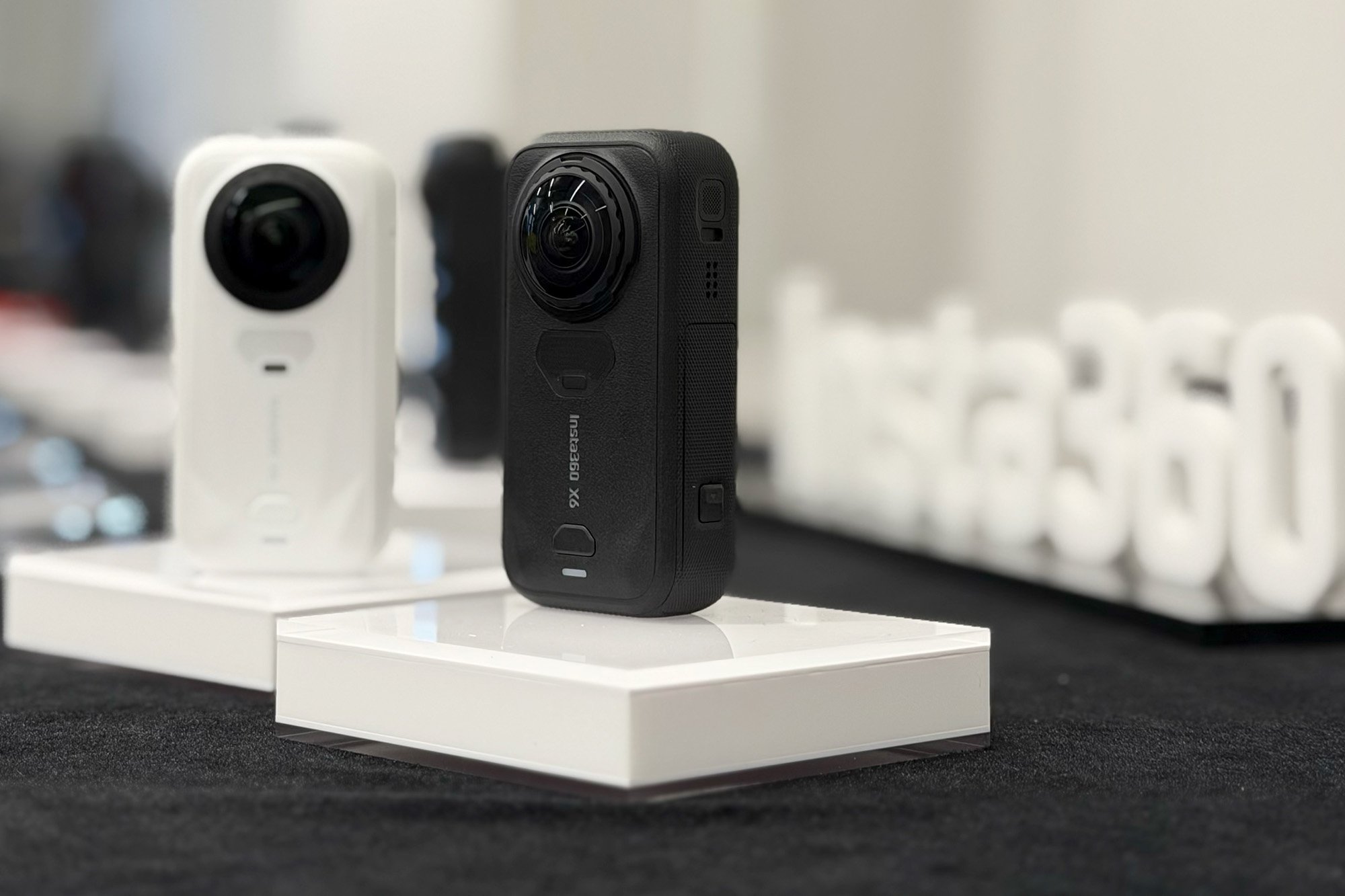
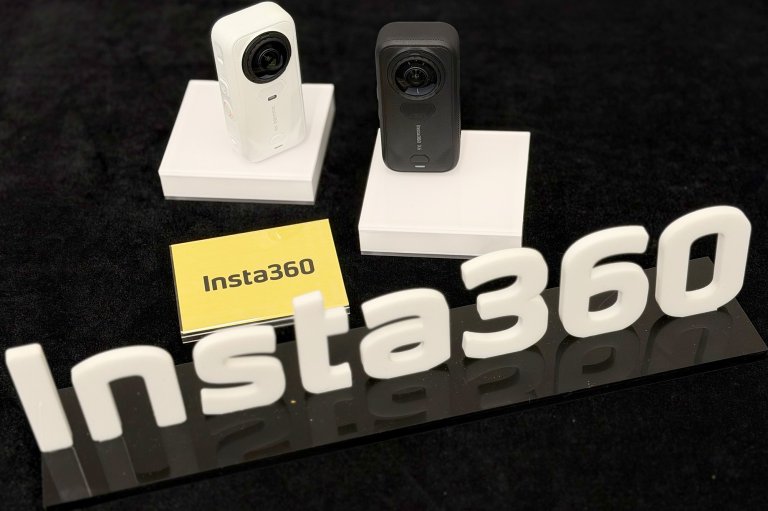
Max Richter, co-founder and vice president of marketing, and Adam Stringer, director of partnerships, gave a presentation to one side of a long table showcasing over a dozen cameras, 1,300 worldwide patents, and a decade of panoramic progression. It all culminated in the new $699.99 Insta360 X6 flagship. [Disclosure: Insta360 provided travel accommodations during the creation of this story.]
“With 360 cameras, we basically reversed the whole principle of traditional cameras: a point-and-shoot camera basically becomes shoot first and frame later,” says Richter. “It’s a technology where you don’t need to make compromises. I think 360 will ultimately replace a lot of other types of cameras. That’s our vision.”
Insta360 was started by JK Liu, who graduated with a computer science degree from Nanjing University. And software—for capturing, reframing, and sharing—still forms the core of the Insta360 business and experience. But the company eventually moved to Shenzhen to access engineers capable of producing hardware that matched its immersive imperative.
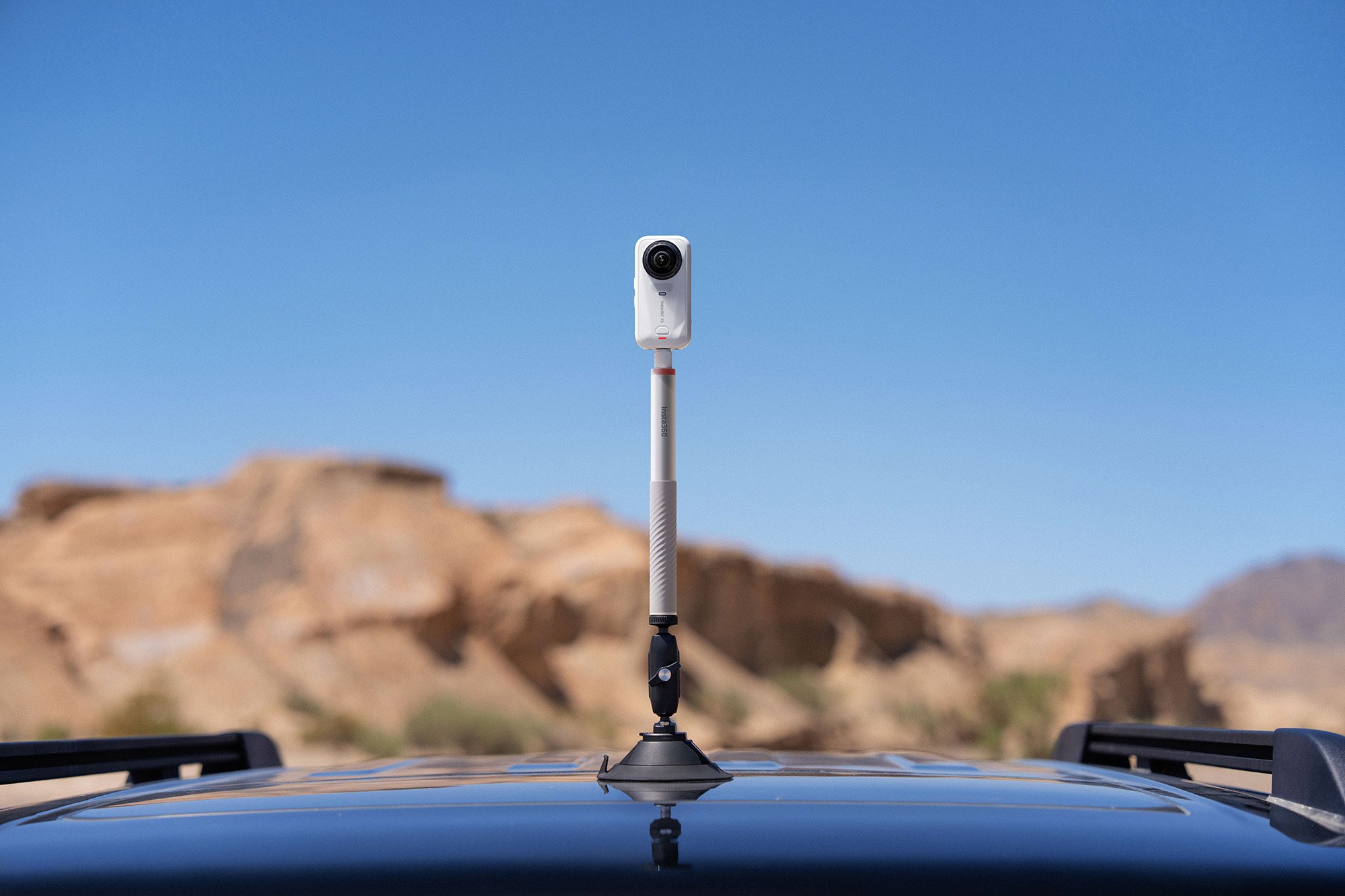
Innovations followed and communities formed. Travel, motorcycling, biking, winter sports, and hiking were all a natural home for seamless, stabilized videos, as well as other computational imaging tricks. The invisible selfie stick helped the third-person effect really gain popularity. And replaceable lenses meant the camera was a long-term investment that could take it wherever you take it.


Since 2020, traditional wide-angle cameras, gimbal cams, video conferencing, and AI-powered imaging have all drawn on 360 technology, what Richter describes as “not only a dedicated product line but also a research hub.”
Assembled, the company’s disciplines—optics, tracking, audio, AI—start to resemble something other than a product catalog. To Insta360, they resemble a person. “The cameraman of the future is not a humanoid robot; it’s more a concept that makes it as seamless as possible for you to catch and share moments,” says Richter.
The X6 is that confluence. With its dual custom Sony 1/1.1″ sensors as its eyes, its triple AI chip as its brain, its four-mic windproof array as its ears, and its 100-plus accessory mount ecosystem as its body.


The X6 features 33% more sensor area than the X5, with 4x the light intake and a new low-light mode to cut flicker, and is the first 360 camera with native in-camera Dolby Vision fed by 10-bit 1.07 billion recordable colors, I-Log, AdaptiveTone 2.0 metering with two exposures per frame. It can capture 8K50fps native in 360, as well as 5K60fps single-lens action mode, 170 degrees wide-angle at 5K30, and 4K120fps slow motion. The replaceable lens system is updated, with 5x more scratch-resistant material that is 60% more affordable to replace if damaged.
The triple AI chip, with one 8-core 3.3GHz 4nm processor and two dedicated imaging chips, has 500% more computing power than the X5, with 106% faster clock speed and 35% lower power draw. This allows on-device rendering and AI editing, sidestepping the need to first transfer to your phone. The PanoMind AI model, trained on 10,000+ hours across 30+ scenarios, will even analyze the full spherical scene of a day’s footage while plugged in at night and suggest a frictionless, zero-input edit (complete phone/desktop editing apps, as well as Google Gemini prompt-driven subscription-based cloud editing are also available).
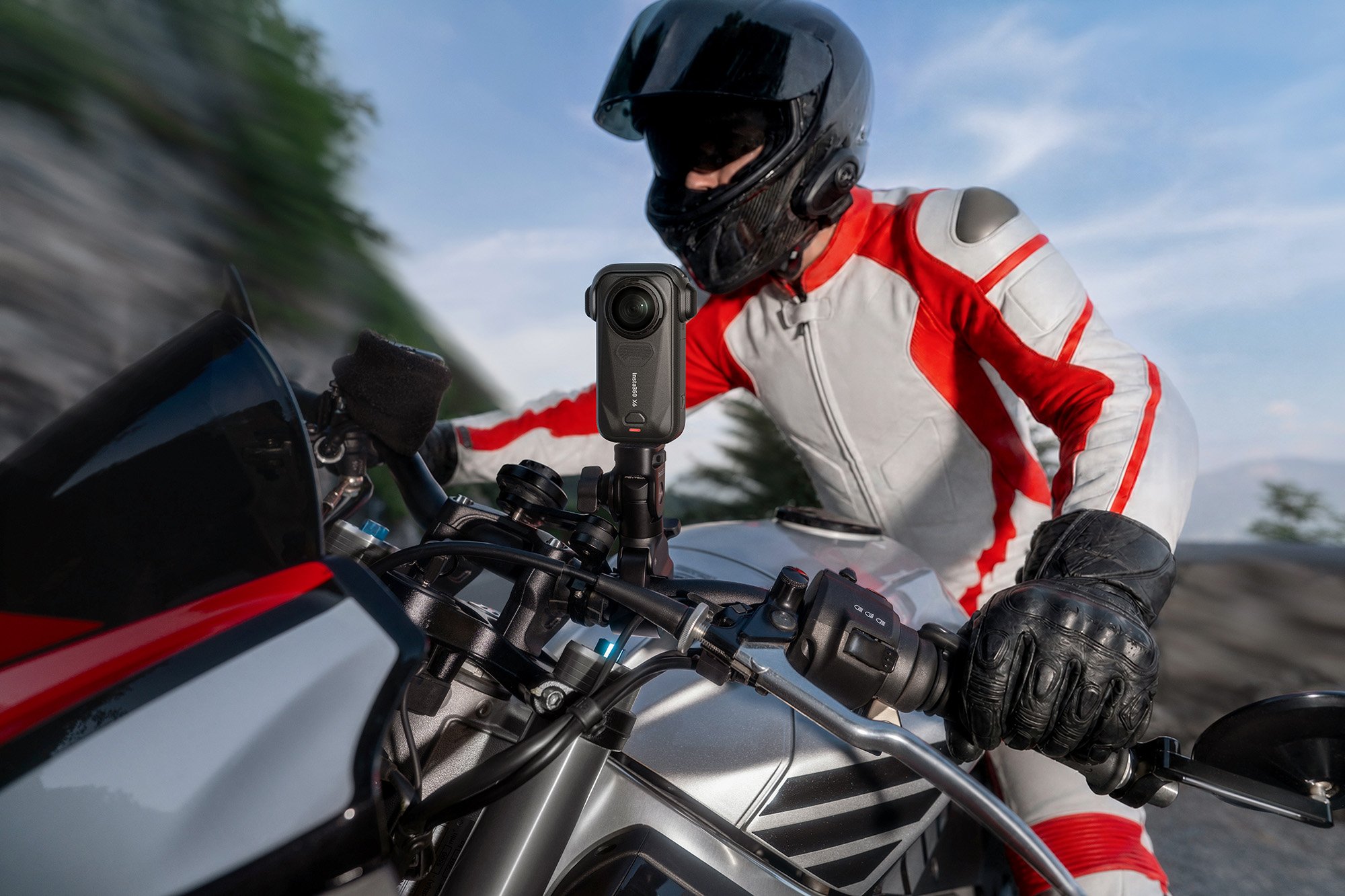
The omnidirectional mic array now includes a hidden engine mic tuned specifically for motorcyclists to filter out wind and engine noise. And an Intelligent Audio Mode reads the environment and adjusts. Plus, Direct Connect supports two Insta360 Mic Air or Mic Pro transmitters.
As for the body, much of it is replaced by math with panning, tilting, and tracking possible virtually. InstaFrame 2.0 locks onto and tracks subjects, and can output flat 4K with no editing step. FlowState stabilization and 360 Horizon Lock contribute to a seamless image no matter the action. And external accessories like the POV Head Tracker and kits for gimbal-style shooting are available if you do want to reframe while in the moment. Beyond that, the accessories system runs deep.
The headline, or throughline, is that Insta360 is positioning the X6 as a 360 camera, subject-tracking gimbal camera, and single-lens action camera in one pocket-sized solution. All available with a tap … more like a push on the pressure-sensitive 2.32″ 1200 nits peak OLED screen.
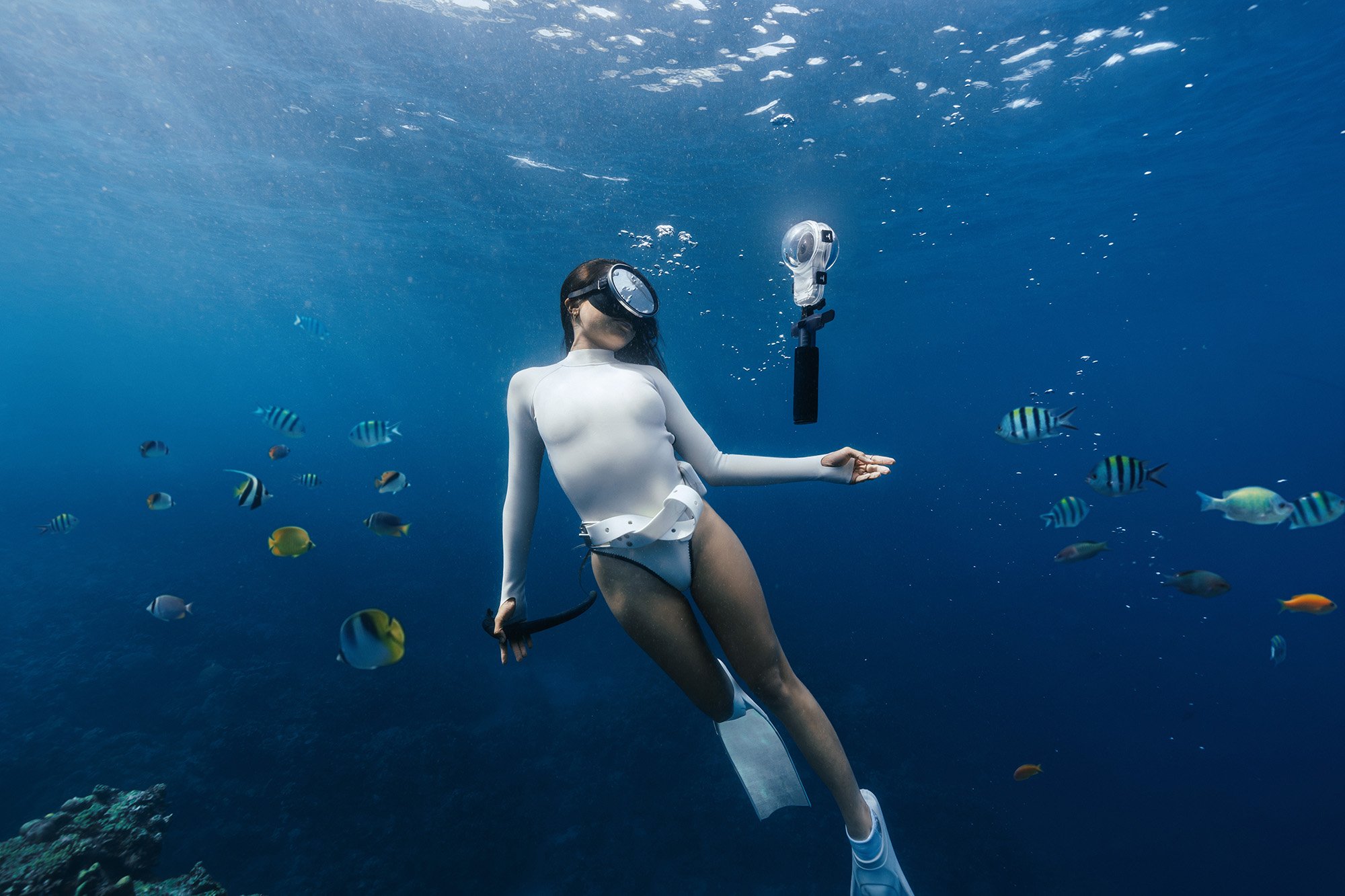
All this is run off of a 2600mAh Xtreme battery that supports 140 minutes of 8K30 360 video, which is 51% longer than the X5. And cooling is 10% more effective, plus fast-charging is 0-80% in 24 minutes. Plus, the X6 body is IP68 rated to 20m bare, and 60m with dive case. And 47GB of usable internal storage allows you to start shooting without an SD card (up to 2TB supported). WiFi 6 and USB 3 allow for quick footage transfers.
As a company that sees software as the connective tissue, additional features are planned to support various production workflows.
The Insta360 X6 is available now in Black and White, starting at $699.99.
We’ve got an Insta360 X6 in for review and will have more to share about it and the evolution of the company and camera’s editing capabilities in the coming weeks.