
It is every pet owner’s worst nightmare: their beloved furry friend going missing. In 2025, a dog named Ziggy made a break for it and bolted during a road trip with his human, a California woman named Surely. Previously, the odds of Surely ever seeing her four-legged friend again wouldn’t be in her favor. The search effort would have likely hinged on fliers, phone calls, and a decent amount of luck.
Thankfully, Ziggy was eventually reunited with Surely, though not because of those analogue outreach efforts. The success story was made possible by a rapidly growing national database of dog photos and a powerful AI search tool maintained by the nonprofit Petco Love Lost. In building out its dog database, the organization is utilizing image-recognition technology often associated with more controversial forms of human surveillance and reorienting it to help pets.
“We need to plug into all the places where people report lost and found pets to make sure that we are connecting the dots,” PetCo Love Lost Chief Product Officer Aaron Klein tells Popular Science.
They aren’t the only ones applying high tech to pet care. Across the country, landlords and property managers are shipping samples of unscooped dog poop to a company called PooPrints, which extracts DNA in order to identify the canine culprit and its owner. Other pet parents are investing in facial recognition (and even snout recognition) technology to identify missing pets.
It all amounts to a kind of Orwellian-style overwatch, but one built for pets, and for mostly noble purposes.
An massive database of pet pics is helping reunite families
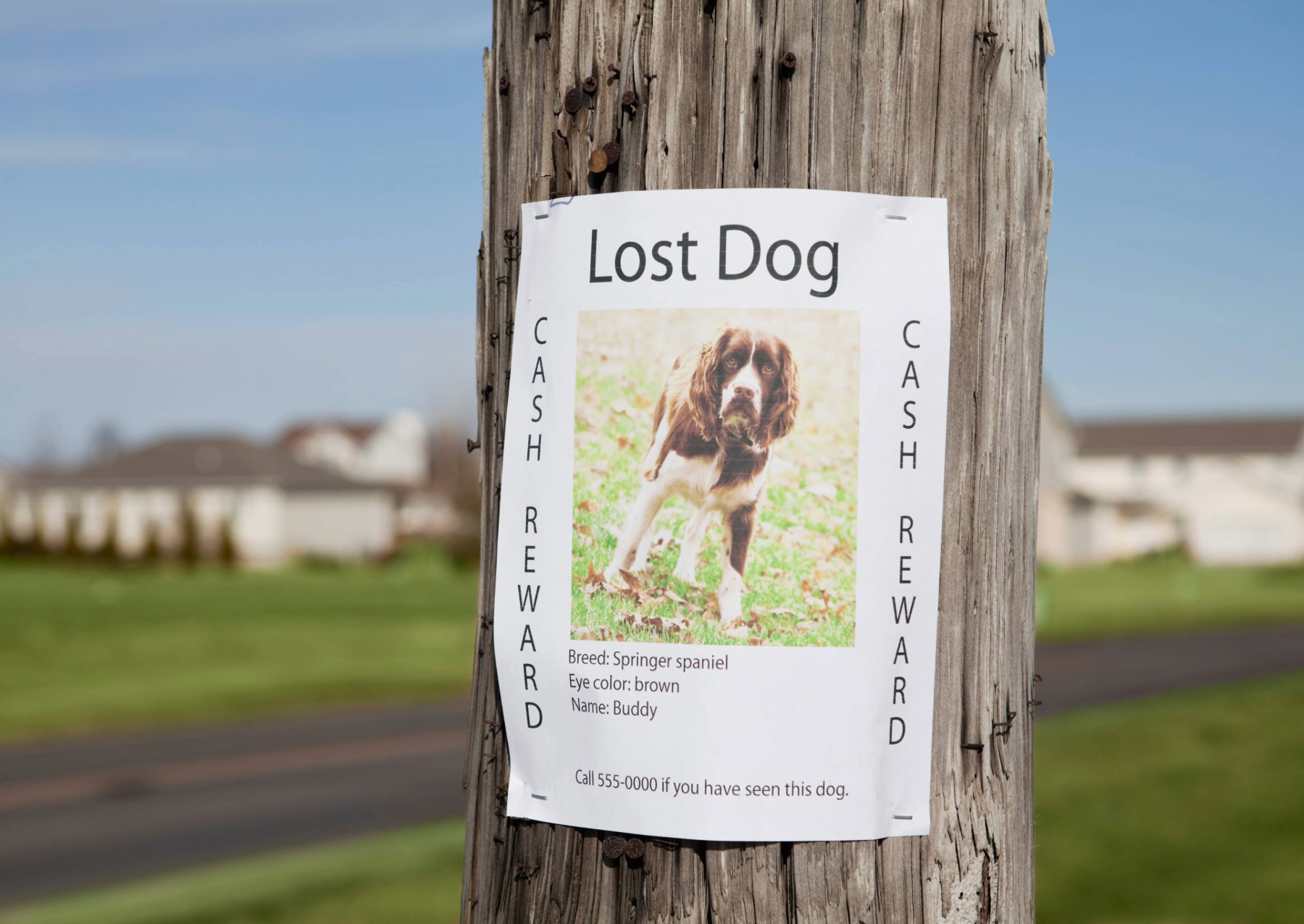
Several years ago, Petco Love Lost evolved from a company called Finding Rover, with the goal of simplifying the chaotic process of finding lost pets. Anyone who’s experienced it knows how complicated it can be. With more than 5,000 animal shelters in the United States alone (and no guarantee a lost pet will even reach one of them), reunification is far from assured. As a result, distressed pet parents often resort to hanging flyers, frantically posting on social media, and calling numerous shelters.
And whether they realize it or not, pet owners are in a race against the clock. If lost animals do end up at shelters, they may not stay long. Depending on the municipality, overcrowded shelters may hold missing pets for as little as 48 hours or just a few days before putting them up for adoption—or, in some cases, euthanizing.
“There’s some tough choices that these organizations have to make,” Klein says.
What those shelters lack in streamlined organization, they make up for in data, particularly images of animals. Klein says most shelters rely on a handful of software systems to manage intake. With permission, Petco Love Lost integrates with those photo platforms that shelters use to collect photos of missing pets. Those images are fed into a centralized database and used to train an AI image-recognition model, similar to how large language models are trained on vast text datasets.
That database and the AI, gives pet owners a crucial head start. When a dog or cat goes missing, owners can download the Love Lost app and upload photos of their pet. The system then immediately cross-references the picture against its database. But the process isn’t as simple as grouping together similar-looking golden retrievers or black cats. Instead, Klein says the model analyzes the animal’s entire body across 512 data points, including eye and fur color, size, and even the distance between its ears. The result is a system that can distinguish between strikingly similar animals with greater accuracy than many humans.
“You would be surprised by the uniqueness of animals,” Klein says. “The naked eye, perhaps can’t discern between these two black cats, but we’re talking about a very powerful computer who can discern these micro differences.”
Once processed, the AI spots a list of potential matches and gives each one a confidence score. The number of results depends on the animal: a black cat or golden retriever (both common pets) in a dense city like Los Angeles may generate several matches, while a distinctive Siamese cat in a rural town may yield far fewer.
But partnerships with shelters only go so far. Research from the American Veterinary Medical Association shows that only about a quarter of missing pets ever end up in shelters. To bridge that gap, Petco also partners with neighborhood-based social platforms like Nextdoor and Ring. When a user posts a photo of a stray pet who winds up sitting on their front porch, the image is sent directly to Petco for analysis.
Pet owners interact with the system through a mobile app with an anonymous chat. While Petco says user data is kept secure, the company also uses automated systems to monitor conversations for scams. Klein says some opportunists falsely claim they’ve found a lost pet and then demand money for its return. In one case, someone even offered to locate missing animals using “psychic powers”—for a fee, of course.
The surveillance system seems to be working. Since its inception, Petco Love Lost says it has reunited more than 100,000 lost animals with their families. And that’s only counting the cases it can directly confirm were resolved through its database. The company estimates the true number could be closer to 300,000.
CSI: Dog Poop
Modern tech more commonly associated with surveillance is also affecting less responsible pet owners. Across the U.S. and in a few other countries, apartment complexes are increasingly using DNA analysis to identify which owners leave behind unscooped dog waste. The leading company in this space is PooPrints, part of Tennessee-based BioPet Laboratories. Using a process similar to FBI forensics, PooPrints can match a sample to the responsible dog down to the molecular level.
“We love shit here,” BioPet Laboratories CEO J Retinger tells Popular Science.
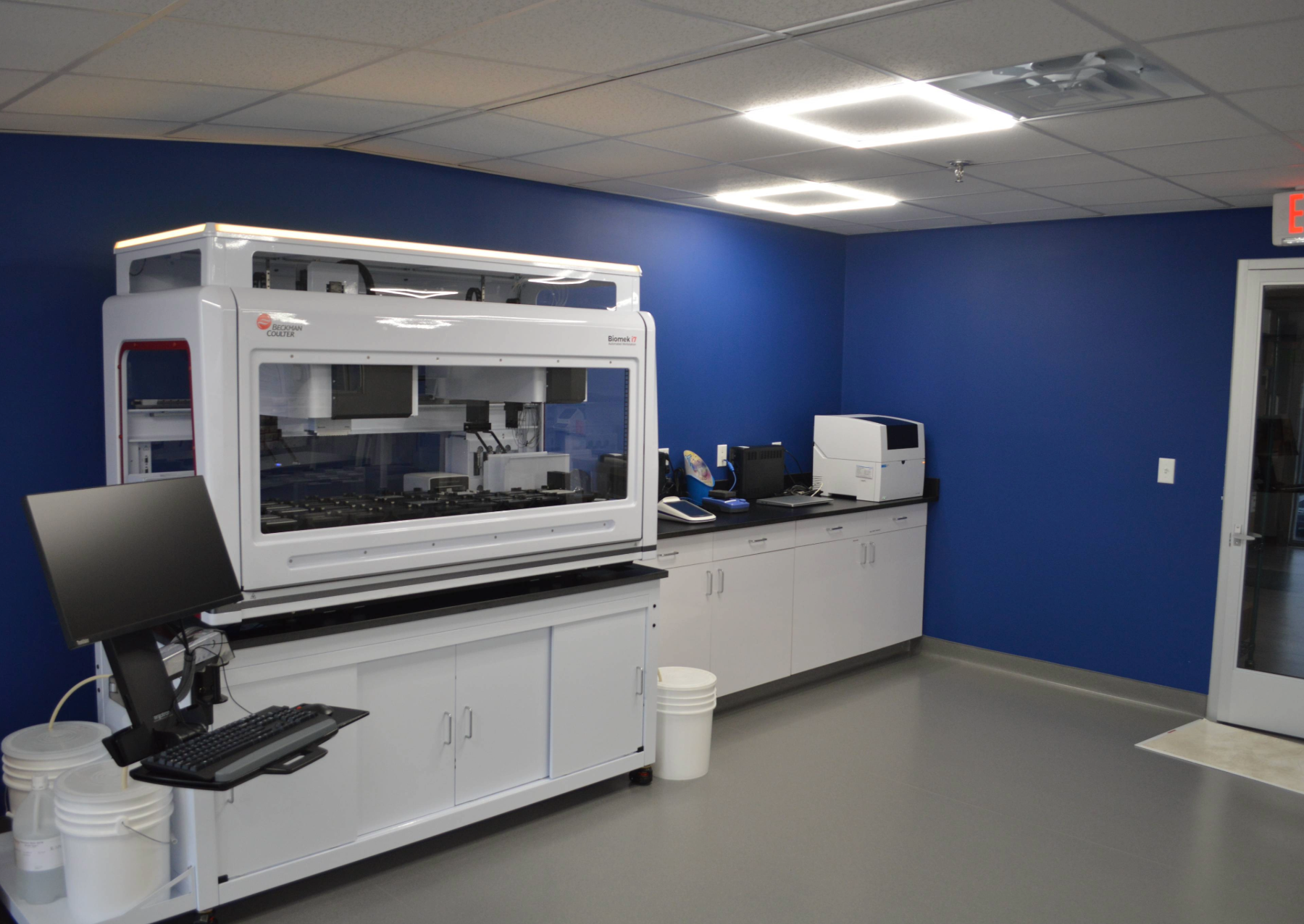
Properties that partner with PooPrints require all tenants to register their animals by swabbing their mouths to collect their unique DNA signature. The samples are sent to PooPrints’ Tennessee lab, which extracts the DNA and creates a reference profile using 16 genetic markers for every dog on the property. Groundskeepers and property managers can then submit a small sample of unscooped, abandoned dog waste for analysis. PooPrints limits its analyses to dog feces—more for practical reasons than technical limitations.
Ensuring all of that dog poop could make it through the mail to their Tennessee lab was a research-and-development challenge, BioPet Laboratories Lab Director Chesleigh Winfree tells Popular Science. Past competitors tried collecting an entire pile of waste, freezing it, and shipping it overnight, an approach that was both impractical and costly. Instead, PooPrints integrated a stabilizing solution into their collection device. The solution ensures that even a small scoop can remain viable at room temperature for extended periods of time. Winfree says they have successfully extracted DNA from samples as old as two years, though fresher poop is still preferable.
The lab analyzes the DNA from the sample and checks for a match against dogs on file. If a match is found, the property owner is alerted and can issue a fine to the responsible dog’s owner.
Those fines have sparked backlash from some tenants online, who recoil at having to hand over their pet’s DNA as part of a lease agreement. However, the reality is that pets and animals in general don’t have the same privacy rights or expectations as humans. In the eyes of the law, they are simply considered property. As a result, tenants trying to skirt PooPrints’ DNA registry requirements are on shaky legal ground. And until French bulldogs learn to speak, that’s unlikely to change.
Some pet owners understandably get heated when they receive a message accusing their animal of illegally relieving itself. Critics, including several who recently spoke with The New York Post, worry about being wrongly accused.
“They’re the poop police. Now I have to be even more cautious,” New Jersey resident and Shih Tzu owner Angelina Budija told The Post. “I think it’s a little over the top.”
In those contested cases, PooPrints offers a DNA verification test, allowing unconvinced tenants to submit a new swab of their pet to compare against the poop sample in question. Winfree says she has seen only two incorrect matches in 18 years. Overall, the service has a nine to 10 percent failure rate, but that is almost always due to collection issues. Some supposed dog samples actually turn out to be cat feces, dirt, or mulch.
PooPrints doesn’t exactly love being called the “Poo Police.” While enforcement and the threat of fines are essential to the process (Winfree herself says she has had to testify in eviction court) they don’t relish it. In fact, they claim that their forensic system has actually helped more apartment complexes allow pets, since property managers feel confident their grounds won’t be overrun by poo.
Snout and pet facial recognition
Beyond fecal matters, scientists and startups are also experimenting with applying other techniques often associated with surveillance to petcare. Korean-based PetNow is developing a system that uses snout recognition to identify missing dogs. They claim that every dog’s nose is as uniquely identifiable as a finger print, or a human face can. Ring, who also partnered with Petco, meanwhile recently announced a feature called Search Party, which uses AI software in its smart doorbell camera to detect missing animals. Ring uses a similar, more controversial facial recognition system to identify humans, and has come under fire in the past for its handling of private information.
Dog facial recognition has applications beyond reunification. In Tanzania, researchers from Washington State University developed a mobile app that uses facial recognition to identify dogs that had been vaccinated for rabies. During vaccination, each dog’s face was scanned and uploaded to a centralized database, allowing anyone who encounters a dog to scan its face and instantly check its vaccination status. Using the app, operators in nearby villages correctly identified 76.2 percent of vaccinated dogs and 98.9 percent of unvaccinated dogs.
These new pet recognition start ups combined with rapid advances in biotech and AI mean tools like these will likely become more common in pet care. PooPrints says it looks forward to expanding beyond waste enforcement, using DNA analysis to help pet owners understand genetic predispositions in their animals which could potentially influence how people approach pet healthcare.
Meanwhile, Petco Love Lost is optimistic that its ever-improving AI will boost confidence when showing lost pet owners images of potential matches. In the meantime, they say owners can help themselves by registering their pets and submitting photos before they go missing. Massive databases and powerful AI help, but responsible pet owners still ultimately make the biggest difference.
“It’s hard to find [unique markings] when you’re anxious and you lost your animal and you’re going through the thousands of images that you have on your phone to find the ones that meet that criteria,” Klein says. “It would be great if people were willing to be more prepared for the unexpected situation and understand that you can be a good pet parent and your pet may go missing in the future.”
